
Today’s electronics market presents increasingly demanding challenges, forcing PCB development teams to accelerate design cycles and bring innovative products to market at unprecedented speeds. Projects that once took months must now be completed in significantly shorter timeframes. Meanwhile, engineering teams are often distributed across multiple countries, requiring seamless and reliable remote collaboration.
Traditional floating licensing models can create bottlenecks when licenses suddenly become unavailable. To address this issue, the named-user licensing model of Xpedition Standard provides each engineer with dedicated, reliable access to the software. This helps eliminate barriers to team collaboration, enabling engineering departments to work efficiently regardless of geographical location or time zone.
Xpedition Standard brings enterprise-level PCB design capabilities into a flexible, intuitive environment that can scale alongside business growth.
Read more:
- Xpedition Standard: Reduce PCB Design Cycles by Up to 50%
- Optimize PCB Design with Xpedition Token and HyperLynx SI Analysis
- Automate PCB Routing with Siemens Xpedition

Let’s explore the five key advantages of Xpedition Standard with Vietbay.
1. Intelligent Design That Adapts to Engineers’ Workflows
Despite their powerful capabilities, traditional PCB design tools can feel cumbersome and difficult for new users to master.
Xpedition Standard redefines the user experience by prioritizing usability. Its modern interface helps engineers navigate and manage even complex design projects more efficiently.
- Streamlined operations: The Global Command Bar integrates intelligent search, keeping essential commands within easy reach. AI-assisted guidance can learn from actual working patterns to anticipate users’ next actions, helping engineers get up to speed quickly and reduce unnecessary clicks.
- Self-guided learning and personalization: Built-in contextual documentation and automated training modules allow users to develop their skills at their own pace. The workspace can also be customized, from the interface and dashboards to personal keyboard shortcuts.
- A balance of usability and technical depth: Advanced capabilities such as multi-net wiring, automated design rule checking (DRC) filters, and integrated PartQuest Explore simulation provide a tool that is accessible to new users while retaining the technical capabilities required for demanding PCB projects.
2. Intelligent Automation That Saves Time
For today’s manufacturing enterprises, time is one of the most valuable resources. Xpedition Standard helps engineering teams reclaim that time through practical, integrated automation capabilities.
- Access to an extensive component library: Through the PartQuest Portal, design teams can access a database of more than 600 million components from major manufacturers, including 3D models, footprints, and frequently updated pricing and availability information.
- Intelligent datasheet assistance: The Smart Datasheet Reader uses natural-language queries to extract key specifications from original component datasheets. Engineers can quickly review the information and drag and drop components directly into schematics, helping reduce manual effort and component selection errors.
- Automation of repetitive tasks: Powerful scripting capabilities automate repetitive operations across projects, reducing manual work and maintaining consistency throughout the design process.
Rather than replacing engineering expertise, these tools augment engineers’ capabilities, giving them more time and focus for meaningful innovation.
The results include shorter design cycles, fewer revision iterations, and improved product quality. With Xpedition Standard, automation is not merely an add-on; it is an integral part of the design workflow.
3. Seamless Integration from Schematic Design to Manufacturing
A connected workflow across every development stage is essential for producing high-quality PCBs. Xpedition Standard supports this through a constraint-driven design approach.
- Connected design data: Engineers can cross-probe between schematics and PCB layouts, reuse standardized circuit blocks through Physical Hierarchical Reuse Circuits (PHRCs), and propagate design changes across the project.
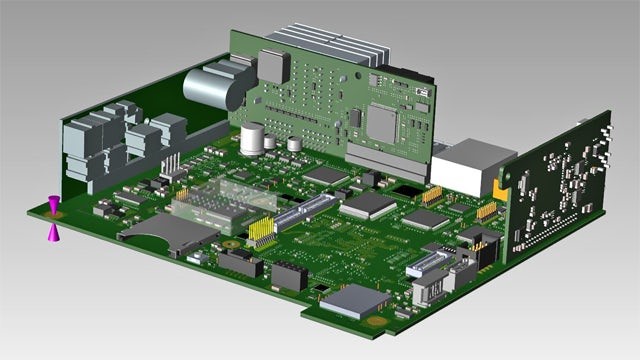
- Seamless mechanical collaboration: Online 3D visualization and collision checking help identify potential mechanical conflicts early, minimizing the need for physical prototypes and costly redesigns.
- Manufacturing quality assurance: Before designs are handed over to the factory, PCBFlow, developed in collaboration with Valor, supports in-depth design-for-manufacturing (DFM) checks to help improve first-pass yield.
4. Secure, End-to-End Online Collaboration
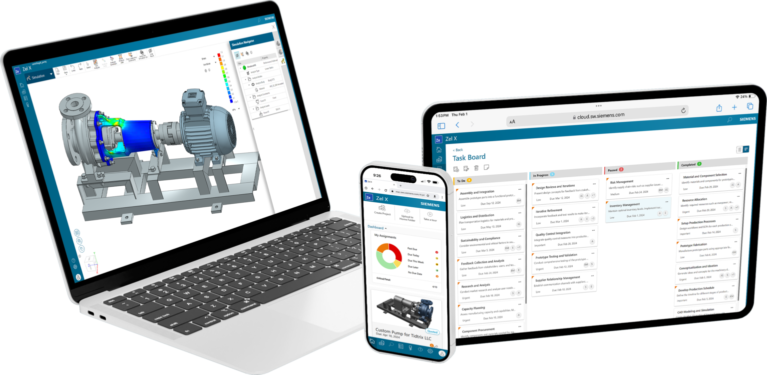
Globally distributed engineering teams need a shared working environment that combines speed, accessibility, and robust security. Xpedition Standard addresses these requirements through Xpedition Connect.
- A single source of truth: Managers, design engineers, and manufacturing partners can work from a centralized data environment, streamlining design reviews and approvals.
- Visual communication: Comments and markups can be attached directly to design objects within the graphical interface, reducing cumbersome back-and-forth file exchanges.
- Enhanced security: Role-based access control helps organizations protect their intellectual property by restricting access according to each user’s responsibilities, including when collaborating with external partners.
Supply chain visibility also helps teams identify potential component shortages and obsolescence risks early, allowing them to take action before production schedules are affected.
The result is a connected environment that supports collaboration across global teams while maintaining transparency, security, and accountability.
Xpedition Standard enables efficient, secure, and uninterrupted collaboration, wherever your engineering teams are located.
5. Flexible Upgrades and Scalability for Growing Businesses
One of Xpedition Standard’s key advantages is its ability to scale alongside expanding projects and evolving engineering requirements. Built on Siemens’ established technology platform, the solution uses a flexible token-based licensing system that allows organizations to activate advanced capabilities when needed.
- Expand engineering capabilities: Extend the workflow to specialized applications such as signal integrity analysis with HyperLynx, rigid-flex PCB design, and advanced 3D modeling without switching to a different core design platform.
- Flexible licensing: Each user has an individual license that can be used on two devices and supports offline work for up to 14 days. Businesses can avoid the need for an in-house license server, reducing infrastructure requirements and IT administration overhead.
Siemens Xpedition Standard goes beyond conventional PCB design software. It provides an integrated design environment that helps businesses streamline workflows, optimize development time, and strengthen their competitiveness in the digital technology market.
Contact Vietbay for expert consultation and licenses tailored to your business requirements.