
1. The Productivity Challenge in Modern PCB Design
Today’s printed circuit board (PCB) design teams are expected to do more with fewer resources: boards are becoming increasingly complex, development timelines are getting tighter, while teams must still balance electrical performance, manufacturability, supply risks, and documentation requirements.
The challenge lies not only in the design itself, but also in the amount of manual work required to manage this complexity. From translating requirements into specific designs, rebuilding existing circuits, adjusting component placement, performing multiple routing iterations, and checking constraints to preparing manufacturing documentation, each step can consume significant engineering time.
These are all necessary steps in the PCB development process, but much of this repetitive work does not directly create differentiation or added value for the product. Instead, it extends project timelines and leaves engineers with less time to focus on critical decisions related to design quality.

To achieve meaningful productivity improvements, businesses need an approach that shortens the path from concept to implementation and product release, while reducing manual operations and disconnected workflows.
Siemens Xpedition addresses this need by combining intelligent automation, artificial intelligence (AI), Design Reuse, and Data Continuity throughout the PCB development process.
2. The productivity paradox in PCB design
PCB design tools are continuously evolving with more powerful features and greater levels of automation. However, having modern tools does not automatically mean that design teams will become more productive.
As the number of components increases, engineers must make more decisions regarding placement, routing, and supply selection. The more design constraints there are, the greater the risk of inconsistency. At the same time, when data across schematic design, layout, simulation, manufacturing, and the supply chain is not closely connected, maintaining information synchronization becomes more complicated.
This is the productivity paradox in PCB design: despite having increasingly advanced tools, engineers can still spend significant amounts of time on repetitive tasks instead of focusing on innovation and design optimization.
To address this challenge, businesses need to combine three key elements:
- Intelligent automation – Reduce manual and repetitive work.
- Design reuse – Leverage proven designs and existing structures.
- Data continuity – Maintain information consistency throughout the workflow.
3. Intelligent Automation: Working at the Right Level, at the Right Time
Automation delivers the greatest value when it reduces repetitive work while allowing engineers to maintain full control over the design—combining proven algorithmic automation with emerging AI capabilities.
AI is particularly useful for tasks involving natural-language interaction, information interpretation, or engineering support from the early stages of the design process. Meanwhile, automation algorithms can handle tasks with clearly defined rules and high levels of repetition.
Productivity also depends on how the design process is organized. If engineers start working on detailed elements too early, they may have to perform significant work before overall requirements and design approaches have been fully defined.
A more effective approach is to work at the appropriate level of detail for each stage:
- Define requirements from the beginning.
- Leverage proven design blocks and implementation templates.
- Maintain continuity from schematic design to layout and product release.
4. Three Practical Applications for Improving Productivity with Xpedition
In the PCB design process, three areas that commonly consume significant resources are design input, layout implementation, and release documentation preparation.
4. 1. From Functional Concepts to Design with Xpedition Standard and CELUS
The new interface of Xpedition Standard integrates CELUS technology to help engineers start with high-level requirements represented through functional block diagrams.
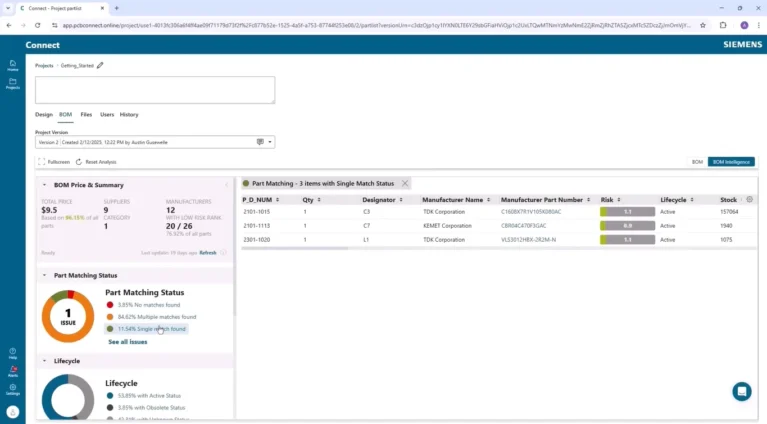
AI combines with intelligent algorithms to help identify suitable approaches and then automatically generate a reference schematic and bill of materials (BOM).
4.2. Optimize PCB Implementation with Placement, Routing, and Design Reuse
Layout implementation is where PCB complexity becomes most apparent. As component density increases, engineers must consider multiple factors related to component placement, design constraints, and signal paths. Changes during implementation can also lead to additional editing and verification work.
Xpedition helps accelerate structured layout tasks, including component Placement, Routing, and design rule compliance updates. This allows engineers to reduce the time spent on routine operations and focus on critical traces and engineering decisions.
4.3. Automate Release Documentation with Valor-Integrated Blueprint
PCB design productivity is not determined solely by how quickly the layout is completed. Once the design has been implemented, teams must also prepare fabrication drawings, assembly documentation, and other materials required for handover to manufacturing teams or manufacturing partners.
When these documents are created and updated manually, the release process can take longer and discrepancies may arise between design data and transferred information. Such omissions can lead to manufacturing confusion and affect project timelines.
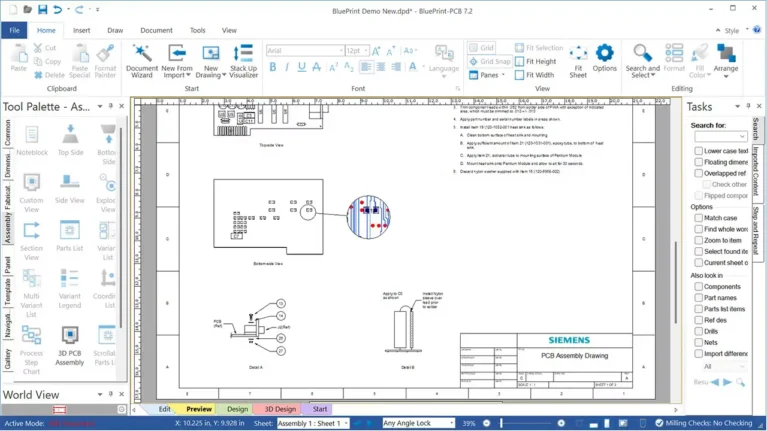
With Blueprint, integrated with Valor technology in Xpedition Standard, businesses can automate the creation of release documentation within a more connected workflow. Linking documentation preparation with design data reduces manual operations, shortens handover time, and improves the consistency of information used for manufacturing.
Read more:
- Introduction to Xpedition and Siemens Versions
- Xpedition Standard: Reduce PCB Design Cycles by Up to 50%
- Top 5 Key Benefits of Xpedition Standard
5. The Real Value Comes from Connecting the Design Stages
Each capability of Xpedition Standard provides its own benefits, but the overall impact becomes more apparent when these capabilities work together within a unified workflow. Improving PCB productivity is not simply about adding an individual automation feature. The real value lies in reducing work that does not directly create value and maintaining continuity from the initial concept through design release.
6. From Manual Design to PCB Design Optimization
As PCB complexity continues to increase, improving productivity requires businesses not only to increase working speed but also to reduce dependence on manual operations. The key is to leverage proven design knowledge and connect the different stages of the development process.
With Xpedition Standard, PCB design teams can minimize repetitive work, improve consistency, reduce design modifications, and enhance the efficiency of handover to manufacturing. This enables businesses to make more effective use of their engineering resources.
(Source: Siemens)
Contact Vietbay – Siemens’ official authorized distribution partner in Vietnam – for direct consultations