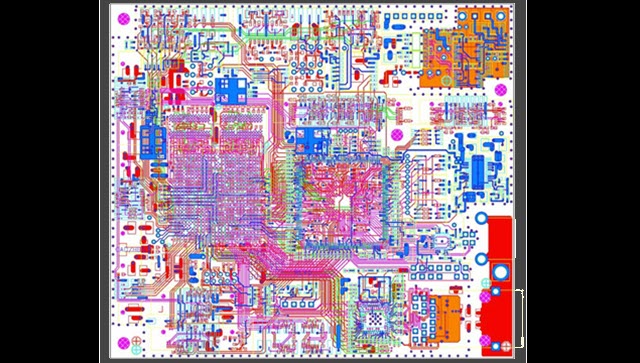

The rapid pace of innovation in the electronics industry is placing increasing demands on PCB design workflows. Engineers must shorten design cycles while ensuring that design decisions remain accurate and reliable.
During the routing process, for example, engineers must make thousands of decisions about how electrical connections are laid out across a circuit board.
An effective automated routing solution must therefore do more than accelerate trace routing. It must also reflect the engineer’s design intent. Rather than automating the entire process mechanically, Siemens takes an approach in which human intelligence guides automation.

1. Automated Routing Guided by PCB Design Engineers
Fully automated routing can accelerate trace routing, but decisions made entirely by the system may overlook specific engineering requirements or the designer’s original intent.
Conversely, engineers can use their experience and expertise to make decisions that better suit each design. However, manual routing often requires considerable time and repetitive work.
Siemens combines these two approaches by allowing automation to perform routing tasks under the guidance of PCB design engineers. Users can incorporate their expertise into the workflow through:
- Design constraints
- Routing strategies
- Project-specific technical requirements
- The designer’s experience and engineering intuition
This approach accelerates routing while preserving the control, flexibility, and adherence to technical requirements needed for PCB design.
2. Demonstrating Automated Routing Capabilities in Xpedition
The following video demonstrates how routing constraints can be integrated directly into the design workflow, allowing traces to be routed automatically while complying with predefined requirements.
Through the “Target Lengths” dialog, engineers can precisely control the length of each net based on parameters defined in Constraint Manager. Minimum and maximum length values are automatically applied to individual traces during routing.
Designers can also adjust tuning schemes to meet the specific requirements of each project. This combines the speed of auto-routing with the flexibility and control of engineering expertise.
Another notable capability is the reuse of validated circuits. Existing circuits can be copied, pasted, and dragged directly onto a board without having to configure them from scratch. This helps maintain consistency while significantly reducing repetitive manual copying and updating.
Read more:
- TOP 5 Advantages of Xpedition Standard for PCB Design
- Introduction to Xpedition and Siemens Licensing Editions
- Xpedition Standard: A Solution to Shorten PCB Design Cycles by Up to 50%
3. Key Benefits of Automated PCB Routing
- Intelligent automation: Routing is integrated with constraint management to help ensure traces meet their target requirements and reduce the risk of errors.
- Maintained designer control: Engineers can adjust tuning parameters throughout the process, ensuring that the final routing results meet the specific requirements of each design.
- Faster design reuse: Validated circuits can be copied and updated quickly in new designs, reducing manual work and improving consistency throughout the workflow.
4. Accelerate Your Routing Workflow with Xpedition
Rather than choosing between manual routing and fully automated routing, Xpedition combines both approaches to leverage the strengths of technology and engineering expertise.
With a routing workflow guided by design constraints, routing strategies, flexible tuning, and design reuse, engineering teams can shorten routing time while maintaining the control and accuracy required for complex PCB designs.
Contact Vietbay – Siemens’ authorized software distribution partner in Vietnam for a consultation on the solution that best fits your requirements.