
Product data is becoming increasingly diverse, spanning engineering requirements, designs, simulations, Bills of Materials (BOMs), manufacturing processes, and quality records. However, as information is distributed across multiple systems and constantly changing, many businesses face challenges in finding data, evaluating information, and making informed decisions.
Integrating Artificial Intelligence (AI) into Product Lifecycle Management (PLM) systems helps address these challenges. Rather than simply supporting information retrieval, AI can leverage relationships between data to analyze changes, identify risks, and help engineering teams work more efficiently.
With Teamcenter, Siemens combines AI and Digital Thread to turn product data into actionable insights that support product development and management throughout the entire lifecycle.
1. Product Lifecycle Intelligence: Leveraging Data to Support Decision-Making
During product development, a design change can affect multiple areas, including engineering requirements, BOMs, manufacturing tools, production processes, and related documentation. Therefore, businesses need more than just the ability to locate data; they also need to understand how different pieces of information are connected.
Product Lifecycle Intelligence refers to the ability to leverage connected data to understand products, their dependencies, and the impact of changes throughout the entire lifecycle.
This capability helps businesses identify affected items, recognize potential risks, and make more informed decisions. With AI built on this connected data foundation, businesses can turn information previously used mainly for searching and reporting into analyses, recommendations, and actionable support.
2. How Is AI in PLM Different from Other AI Tools?
Today’s widely used AI tools can summarize content, answer questions, and generate text. However, PLM data has complex structures and relationships that these tools cannot automatically understand.
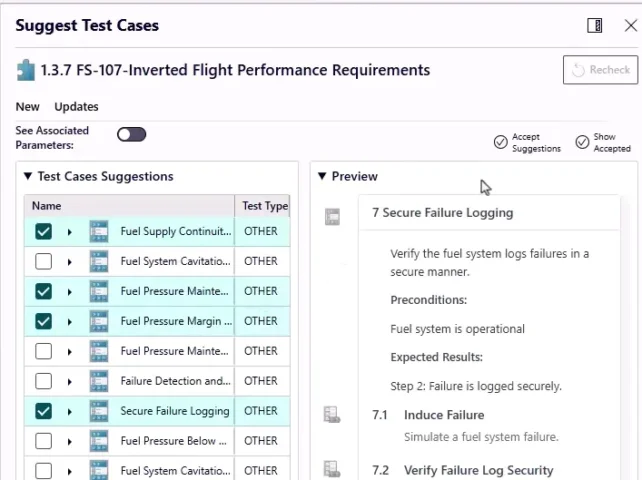
For example, when an engineering requirement changes, a business needs to identify which related software functions, test cases, and applicable standards also need to be updated.
Without this context, AI may provide answers that overlook important information needed to support engineering work.
AI in PLM directly leverages relationships managed within the PLM system, helping users understand not only the content of the data but also its impact on engineering, manufacturing, quality, and service activities.
3. Digital Thread: Connecting Data Throughout the Product Lifecycle
Digital Thread is a continuous flow of digital data that connects product information across disciplines and lifecycle stages, from requirements definition and engineering design to manufacturing, quality management, and after-sales service.
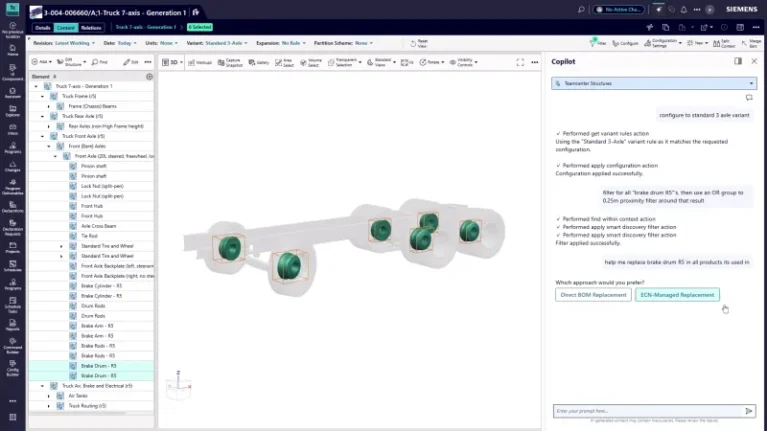
With connected data, businesses can:
- Maintain traceability: Track relationships between data and activities at each lifecycle stage.
- Assess the impact of changes: Identify components, processes, and documents that may be affected.
- Improve collaboration: Connect information across engineering, manufacturing, and other relevant teams.
- Identify risks early: Provide more complete context for evaluating potential issues.
4. AI Applications in PLM Workflows
When integrated into PLM workflows, AI supports various activities throughout product development and management:
- Information retrieval: Provides faster access to product data, processes, and relevant knowledge.
- Change impact analysis: Identifies and consolidates items that may be affected when a design or product component changes.
- Engineering requirements review: Helps identify unclear or inconsistent requirements.
- Test case recommendations: Supports the identification of test cases relevant to product requirements.
- Workflow automation: Assists with recurring tasks and reduces manual effort.
For example, instead of checking individual systems and documents to determine the impact of an engineering change, users can ask AI to consolidate relevant information. AI can also help review requirements and recommend test cases.
These applications help reduce the time spent searching for and consolidating information, while enabling engineers to make better-informed decisions. It is important to note that AI serves as a supporting tool and does not replace users’ professional judgment or final decisions.
5. Teamcenter Brings AI into Product Lifecycle Management
Siemens Teamcenter combines PLM capabilities, Digital Thread, and AI within a unified environment for managing product data and processes. As a result, AI can leverage information and relationships already managed within the system, rather than processing only isolated documents or individual data sources.
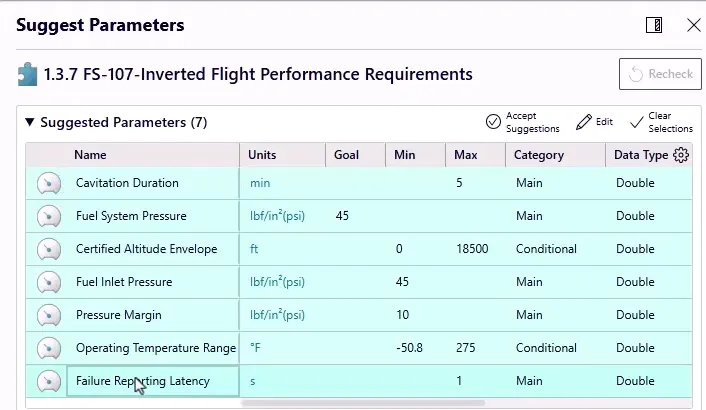
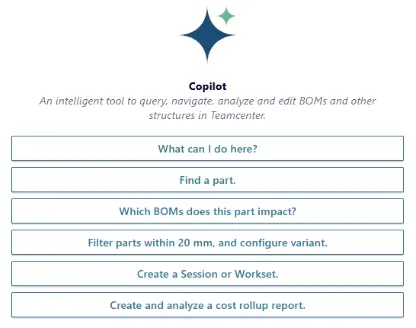
Teamcenter Copilot helps users apply AI to PLM tasks such as:
- Analyzing the impact of engineering changes.
- Improving product requirement quality.
- Retrieving knowledge across the product lifecycle.
- Recommending test cases.
- Supporting workflow automation.
In addition, recent Teamcenter enhancements continue to expand AI applications in BOM management, engineering changes, requirements analysis, test case recommendations, Microsoft 365 Copilot integration, and AI Agent-driven workflows.
By combining PLM, Digital Thread, and AI, Teamcenter helps businesses go beyond managing product data to leveraging the relationships between data, improving efficiency in product development and lifecycle management.
Source: Siemens
Contact Vietbay for direct consultations: